
On Roman Orgies
Postcards from the Past, Number Twenty-Six


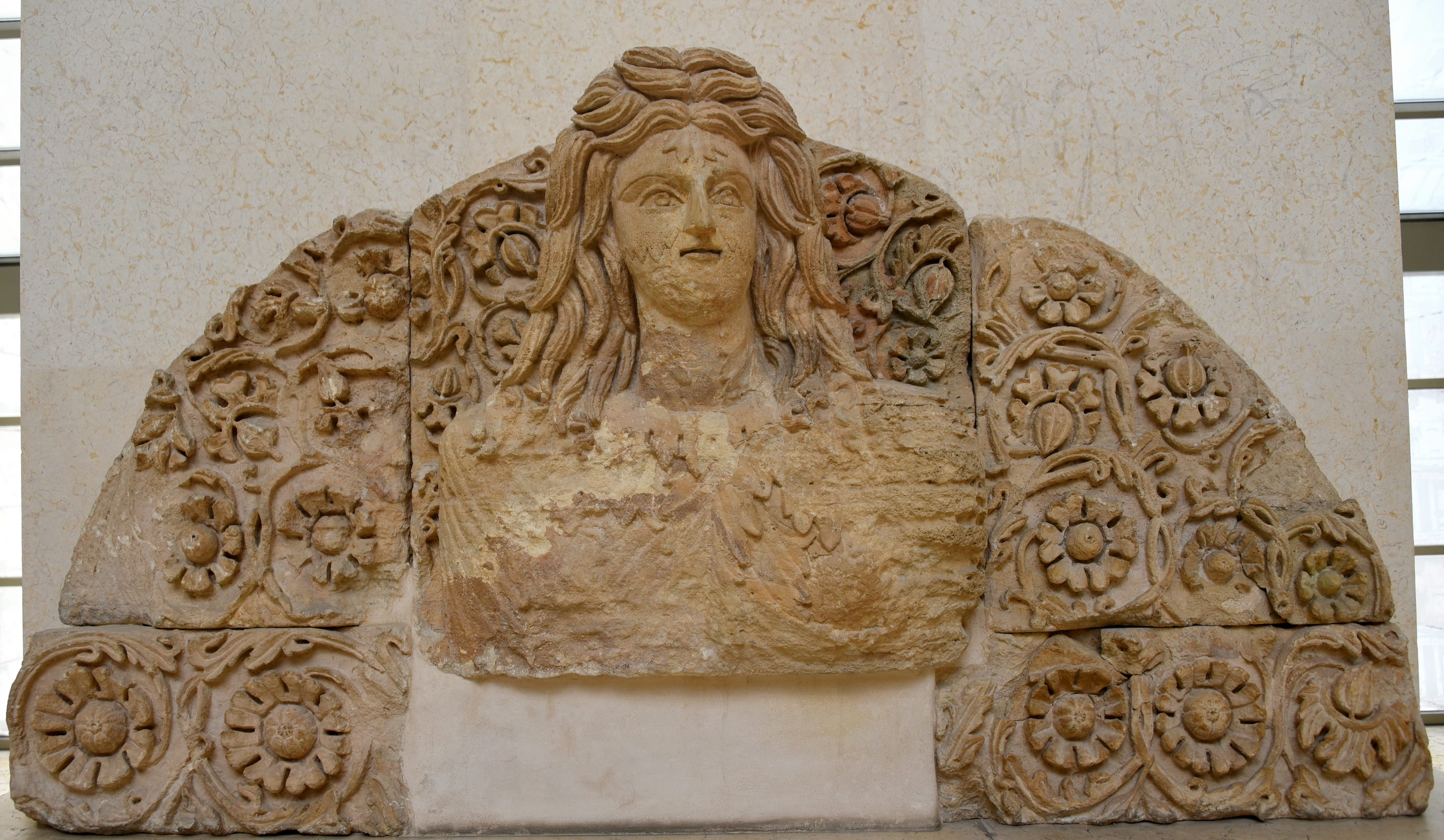
It is a stereotypical view of elite Romans that they frequently engaged in orgies, one formed by the famous excesses of people like Elagabalus. It should be noted, however, that these excesses are remarkable because they are outside of the norm. Although a Roman gentleman was expected to be virile and ‘manly’, that manliness revolved around being entirely in control of one’s behaviour. A Roman gentleman was expected to be dignified, restrained, gentle, educated, measured, restrained in his luxuries and polite. Gluttinous banquets and sexual excess were very much against the Roman norm, and that emperors like Elagabalus and Nero engaged in such wanton excess is evidence of their lack of civilised behaviour rather than evidence for the behaviour of all Roman elites. Of course, that doesn’t mean that they didn’t also enjoy a bit of wantonness every now and then, but to do so is un-Roman, not typically Roman.
It also doesn’t help that when the sources talk of ‘orgies’, they are not talking about the sort of orgy you are thinking of, you saucy little minx. In Latin, ‘orgy’ describes the secret rites performed during ceremonies linked to cults such as Bacchus, which are celebrated with extravagant dancing, singing, drinking, and so on. An ‘orgy’ was quite the physical workout, but not in the way you might have expected.
Widespread around the Mediterranean was the worship of the Syrian fish-goddess of Hierapolis, Atargatis. The Syrian cults, although not as popular in the West as those of Asia Minor and Egypt, were spread by Syrian slaves, merchants and soldiers, who also brought with them the worship of all manner of local gods. The following passage describes the orgiastic frenzy of the devotees of Atargatis, but several of the mystery cults engaged in similar rites.
“They appeared garbed in various colours, misshapen, their faces smeared with foul paint and their eyes painted with oil, wearing turbans. saffron-coloured vestments and garments of fine linen and silk; and some wore white tunics painted with purple stripes in all directions like little spears, girt with belts, their feet shod with yellow shoes ... Then with their arms naked up to their shoulders, holding up huge swords and axes, they shout and dance a frenzied dance, aroused by the sound of the pipe. After we had passed not a few cottages, we came to the villa of a certain rich property owner, where, as soon as they entered, they let forth with discordant howlings and darted about in a frenzied way. And for a long times they would bend their heads down, twist their necks with supple movements, and whirl their hanging hair in a circle. And sometimes they would take to biting their own flesh, and finally each one cut his arms with the two-edged sword he was carrying, while one of them, who was more frenzied, panting rapidly from the depths of his heart, as though he were filled with the divine spirit of deity, feigned he was smitten with madness ... He began to speak with a noisy prophecy, inventing a lie, assailing and accusing himself, alleging that he had perpetrated some wrong against the rules of the holy religion, and demanding just punishment at his own hands for the notorious crime. And finally, seizing a whip, a special accoutrement of those effeminate men ... he scourged himself ... You might see the ground wet and defiled with the effeminate blood from the cutting of the swords and the blows of the scourges ... But when at length they were weary, or at least satisfied with lacerating themselves, they put a stop to this bloody business; and they received in the wide folds of their garments contributions of bronze coins - aye, silver, too - many vying to offer these, and also a cask of wine, cheese, and some meal and winter wheat.”
(Apuleius, The Golden Ass, viii, 27-28)
The cult of the Phrygian mother-goddess Cybele remained one of the most important mystery religions of the Roman Empire from the second century BC until the triumph of Christianity. The cult revolved around its priests, who were self-castrated men who then lived as women. Latin, in terms of personal gender expression, struggles with gender neutral pronouns, and so the Romans lacked a word to describe the gender status of these priests. Here, they are referred to as ‘eunuchs’, a catch-all term for males who are no longer seen as ‘true’ men for a variety of reasons. In reality, these priests were seen as, and lived as, women. One of the most important rites of this cult, later absorbed into Mithraism, was the taurobolium, baptism with a spray of blood from a freshly slain bull.
“She it is of whom the ancient and learned poets of the Greeks have sung [how that from her sanctuary she rides in state] on a chariot driven by a pair of lions ... And they have surrounded the top of her head with a mural crown, because embattled in excellent positions she sustains cities; which emblem now adorns the divine mother’s image as she is carried over the earth in awesome state. She it is whom different nations in their ancient ritual acclaim as the Idaean Mother, and give her troops of Phrygians to escort her, because men declare that first from that realm came the wheat, which then spread over the world. They gave her eunuch priests, as wishing to indicate that those who have violated the majesty of the Mother, and have been found ungrateful to their parents, should be thought unworthy to bring living offspring into the regions of light. The taut tomtoms thunder under the open palm, the hollow flutes prick up the spirits with their Phrygian cadences, martial arms show a front of violent fury, that they may amaze the ungrateful minds and impious hearts of the vulgar with fear of the goddess’s majesty. Therefore, as soon as she rides through mighty cities, silently blessing mankind with unspoken benediction, they bestrew the whole of her progress with silver and bronze, enriching it with bounteous largess, and snow down rose flowers in a shower, overshadowing the Mother and her escorting troops.”
(Lucretius, On the Nature of Things, ii.600-28)
My apologies if you came looking for those sorts of orgies and are now disappointed.
If you think this writing is deeply profound and important, or if you think I look like the sort of chap who needs a couple of bucks for a cheese sandwich (I have to import the correct cheese!), please feel free to tip me something by clicking on the link below. $5, $10, $20 or whatever you think this gentle trickle of interesting information is worth! I understand that you might not be able to give something every month, but you might want to give something today. It all helps me keep this content coming.

If you have enjoyed this little peek into Rome’s lustier corners, that’s just the beginning! Paid subscribers get access to Acta Populi, my private weekly dispatch packed with exclusive articles, archaeological discoveries, and more, rather fun, snippets like these. Acta Populi members not only get access to the weekly newsletter, but an extra monthly helping of these windows into the Roman world.
It’s $5/month (or $50/year), and you’ll also get a free copy of my translation of Suetonius’ Twelve Caesars as a welcome gift.
Upgrade now to join Acta Populi by clicking below.
Have I missed a previous post about the senatorial and equestrian classes? I've been wondering if wealth was the only requisite. Did the surviving son of a senatorial-class father inherit that status? What if a man of senatorial rank had a severe financial reverse -- could he lose his rank and revert to an equestrian? Who kept tabs on those who qualified for one rank or the other?