

OOGABOOGA

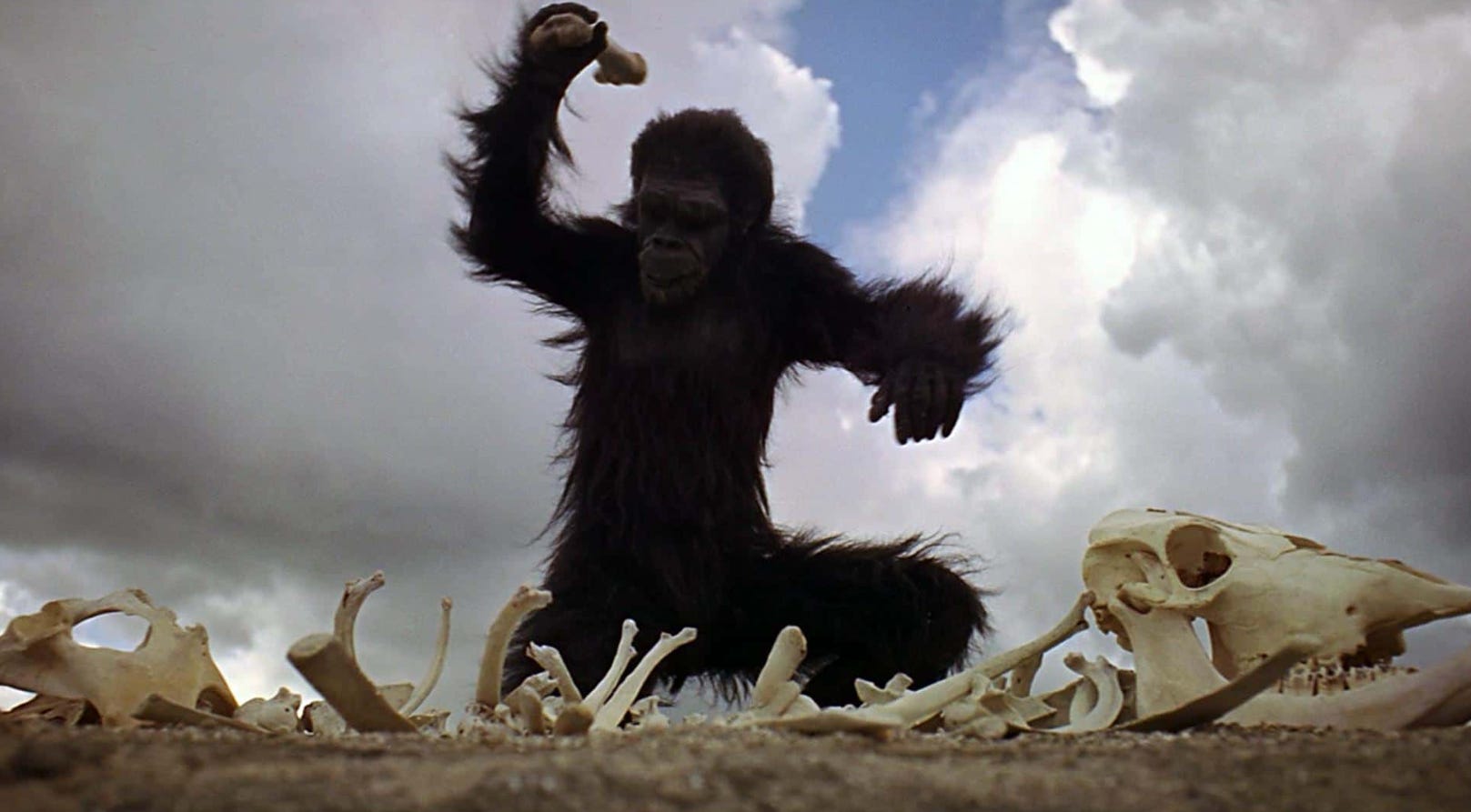
There’s a commonly accepted idea that ancient people explained the world around them by inventing myths. The tide goes in, the tide goes out; you can’t explain that! Well, bro (which is how ancient people spoke, right), there’s this dragon, right? And he ate this magic rock and then each night he flies across the sky, and blah, blah, blah …
The problem with this idea is that we can also see from the sources, such as Pliny in Natural History, that he and others like him, despite some peculiar ideas, are at least attempting to understand their world in some sort of systematic way. It’s not ‘science’ per se, but it has some sort of methodology to it, and when it comes to certain aspects of the world around them, people like Pliny are trying to ask questions about what they understand and how they understand it. Are ghosts real or figments of the imagination? Things like that. They are not simply using a ‘god of the gaps’ argument as putty to fill holes in their knowledge.
So how accurate is the viewpoint we have of ancient mythology, and where does this notion come from? Is the idea that ancient people invented myths to explain their world a bit of a, well, a bit of a myth? Are we the myth makers!?
This whole idea is not really how myths work, and the reason we popularly believe it is can be laid, broadly, perhaps, at the feet of our old friends the Victorians, specifically Victorian anthropologists.
The popular version of this idea runs something like this: ancient people observed lightning, or volcanoes, or the changing of the seasons, and didn’t have science to explain these things, so they invented stories instead. Zeus throws thunderbolts. Vulcan has a forge under the mountain. Persephone descends to the underworld every winter. In this explanation, myth is a kind of proto-science, a primitive hypothesis dressed up in narrative clothing. Someone observed a phenomenon, didn’t understand it, and made up a story to fill the gap. The story caught on, and bingo, there it is - mythology!
This is wrong, or at best quite misleading, and it’s wrong in two distinct ways. The first is about how oral traditions are actually formed, and the second is about the intellectual history of this notion itself.
Folklorists have a technical term for the kind of story we are really talking about here: etiological legends. An etiological legend is a narrative told as true (that is what makes it a legend rather than a folktale, which its tellers understand to be fiction) that provides an explanation for why or how something exists. The rainbow as God’s covenant after the Flood, say. The seasons as Persephone’s annual descent and return. That sort of thing. These stories are real, and they exist in some cases across cultures, and some of them do indeed attach explanations to natural phenomena. So far so good.
The problem here is the verb ‘created.’ The popular account imagines that someone, at some point, sat down, invariably around some sort of campfire, dressed in animal skins, and invented an etiological legend to explain something they didn’t understand. A proto-scientist without the scientific method, if you like, devising a narrative hypothesis. But that is not really how oral traditions work. We imagine some sort of tribal shaman, with a goat skull balanced on his head, inventing the tribe’s opinion on how the universe works and then informing everyone else of the story he has just made up. Legends do not spring into existence from the mind of one person, fully formed. They diffuse, mutate, adapt to new situations, and continue to change as they pass from teller to teller across time and space. They evolve. As an analogy, consider an alphabet. Nobody ever sat down and drew the alphabet in the sand with a stick, pointed at it and said, ‘There we go, chaps, these are the letters we are going to use from now on. Any questions?’ They gather in the corners of the mind like dust. They settle on the lazy pools on the outside of a bend in a river, like silt. You can’t point to a period in time when the Greek alphabet began, and you can’t point to a period in time when it stopped, either. It’s a living, breathing, evolving entity, and myths are similar beings. Twentieth-century folklorists spent considerable effort trying to track down the origin points of contemporary urban legends and consistently failed to find a single moment of creation. What they found instead was a process of cross-pollination, mutation, and gradual coalescence. There’s no good reason to think ancient oral traditions operated any differently.
In the Roman world, Mount Etna, in Sicily, erupts with terrifying shaking of the earth; fire and smoke pour billow from the mountain, and the ground itself seems to clang like the ringing of some great anvil. There already exists, across the Mediterranean world, a tradition of Hephaistos (Greek) or Vulcan (Roman), a god of fire and a craftsman hammering at his divine anvil. At the same time, the word ‘volcano’ itself comes from his Latin name, Vulcanus. So it’s not a great leap to look at Etna erupting and then invent a fire-god to account for it. What appears to have happened is something more organic: an existing tradition of a fire-god and smith-god gradually moulded itself around the observable reality of a volcanic mountain that belched flame, shook the earth, and glowed at night. In the telling and retelling, details came together. The Cyclopes became Vulcan’s assistants at the forge beneath the mountain. The noise and fire became the forging of Jupiter’s thunderbolts. Particularly violent eruptions became moments when the god’s work intensified. The etiological function of the story, ‘why does Etna erupt? because there is a divine forge underneath it,’ slid into existence without a single moment of invention. No storyteller needed to pitch this idea to a sceptical audience and convince them to believe it wholesale. It emerged gradually, through the ordinary mechanics of oral tradition.
We can see this process at work in the literary record, because the traditions that eventually attached to Etna were not even consistent with one another. Pindar, in his first Pythian ode (composed in 470 BC), places the monster Typhon beneath Etna, imprisoned there by Zeus after his failed rebellion against the gods. Etna’s eruptions, in Pindar’s telling, are Typhon’s agonised thrashings (Pythian 1.15-28). That is a completely different etiological legend from the Vulcan’s-forge tradition: same volcano, different explanation, but a similar trope, that of something (or someone) beneath the mountain itself, rattling the foundations. And in the Prometheus Bound (attributed to Aeschylus), both traditions appear simultaneously in a single passage. Typhon lies ‘pressed down beneath the roots of Aetna,’ while on the summit ‘Hephaestus sits and hammers the molten ore’ (PB 353-374). Suddenly we have a whole new myth from the collision of two other ones.
This illustrates the point quite nicely. If myths were invented to explain phenomena, you would expect a convergence that results in one volcano, with one explanation. If myths are created at a set point, both myths would have had to have been created at the same point and would compete against each other. That two narratives have come together to form a third shows how these narrative streams have crossed to form a larger channel. Multiple traditions attached themselves to the same striking natural feature, each evolving independently, sometimes blending, sometimes contradicting one another. The Greek settlers who colonised eastern Sicily brought Hephaistos with them and appear to have superimposed his cult onto a pre-existing Sicilian fire-deity called Adranos, who was himself already a personification of the volcano - layer upon layer, tradition upon tradition, with no single author and no single fireworks burst of invention.
And there’s a further wrinkle in the bedsheets of how we read this evidence, because the versions of these stories which survive are almost exclusively literary. Virgil gives us the most famous account of Vulcan’s forge beneath Etna in Aeneid 8.424-453, where the Cyclopes Brontes, Steropes, and Pyracmon hammer out thunderbolts in a cavern eaten by furnace-fire. It’s all magnificent stuff, of course, but it’s also a self-conscious literary composition by an educated author reworking existing tradition for his own artistic purposes, not the oral tradition itself. The same is true of Pindar, of the author of the Prometheus Bound, of Ovid. Because these literate reworkings are what survive, they prejudice our prejudices of the past, and we end up reading the whole shebang through the eyes of its swishest, most intellectually sophisticated versions, which therefore makes it easy to assume that the story was always a deliberate, self-conscious literary exercise. It was not. As something of an analogy (and no analogy is perfect, right?), Tolkien was riffing on a lot of European (and wider) mythology when he created Middle-earth, but even though Lord of the Rings may have analogous leanings, moral lessons and a wider metanarrative it’s not, in itself, an attempt to explain how the world works or to act as a definitive version of the myths he used to construct his world.
All this waffle gets at something important about how myths were actually received in the ancient world. Even in antiquity, there was a split between how ordinary people and how intellectuals related to traditional narratives. The pre-Socratic philosopher Xenophanes, writing in the late sixth century BC, was already criticising Homer and Hesiod for attributing human vices to the gods, and made the famous observation that if cattle and horses had hands, they would depict their gods as cattle and horses (DK 21 B15). By the late sixth century we also have Theagenes of Rhegium, who is generally credited as the first systematic allegorical interpreter of Homer, reading the battles of the gods in Iliad 20 not as literal events but as allegories for the opposition of natural elements - fire against water, hot against cold, good against evil. By the time we get to Plato, this critique has become even sharper. In Book 2 of the Republic, Plato argues that traditional myths should not be admitted into his ideal state, ‘whether they are supposed to have an allegorical meaning or not. For a young person cannot judge what is allegorical and what is literal’ (Republic 2.378d). So do not tell Plato I just used an allegory, OK? Keep it between us. Plato felt the need to say this because many people did believe these stories literally, and, crucially, he knew it. The allegorical reading of myth, so the idea that these stories were really ‘about’ something else (natural forces, moral principles, philosophical truths), was intellectual icing on the cake, not the cake. This, of course, also suggests the opposite - that some people do believe them to be literal. We can then picture what we believe to be the default - ordinary people telling and retelling these stories around hearths and at festivals. We can parse this, perhaps, a little more clearly in our minds when we think about how we see mythology being formed. People sitting around campfires and spinning yarns is how we imagine such things are created, and so this version of the myth-telling process becomes the standard creation moment for us. These people - those who embraced, told, and believed in etiological legends in this context didn’t necessarily think of them in metaphorical terms. They believed in them.
That sounds a bit dismissive of me, like I’m painting simple peasant folk as a bit dim, but what I’m trying to express is the notion not of how gullible some folk are, but of how they interact with mythology. To Virgil and Plato, myths are intellectual pursuits that need to be unpacked and studied. They are interested in stripping them down to their ingredients level and figuring out how the cake is made. Everyone else is, to an extent, purely worried about how good the cake tastes.
So we have, even in antiquity, a two-track situation: ordinary people believing the legends in something close to literal terms, and intellectuals reading them allegorically or dismissing them as bad cake. And it’s the intellectuals who leave us the written record, which means our perception of how ancient people related to their own stories is skewed from the outset. When a modern person says ‘the Greeks used myths to explain natural phenomena,’ they are, whether they know it or not, adopting the intellectuals’ perspective on cake making and projecting it backwards onto the entire culture. They are taking Xenophanes’s reading, or Plato’s, and assuming that is what everyone else thought, too.
So where does the modern version of this idea come from? I blame the Victorians for everything, mostly because it’s funny, but also, partly, because the Victorians are to blame for everything. E.B Tylor’s Primitive Culture (1871) was enormously influential. Its full title is worth noting: Primitive Culture: Researches into the Development of Mythology, Philosophy, Religion, Art, and Custom. Tylor’s central argument was that ‘primitive man’ was an early philosopher who applied his reason to explain events in the natural and human world. In Tylor’s narrative, myth was a form of proto-science, or a sort of primitive attempt to explain the physical world through narrative, which would eventually be superseded by actual science as cultures progressed from ‘savagery’ through ‘barbarism’ to ‘civilisation.’ For Tylor, myth and science were mutually exclusive, and once you had the latter, you no longer needed the former. All very nice, but it comes across as intellectual housekeeping rather than an attempt to actually understand the wider context. Being nasty about the Victorians is great fun, and valid sometimes, but while we must acknowledge that we stand on the shoulders of giants and those giants included Victorian ones, it’s also fair to say that they did love to pigeonhole everything a bit, bless them.
This narrative rested on a set of assumptions about cultural evolution that were very much products of their time. The idea that human societies progress through fixed stages from ‘savage’ to ‘civilised’ and the idea that ’primitive‘ people think in fundamentally the same way as modern Europeans, but were not as clever, and that their myths and rituals are essentially failed or bad science. This notion that ancient people were us but a bit stupider persists when it should perhaps be more precise to say that they were us, but without the collective societal knowledge. Give a Roman a billion dollars and all the shared knowledge we have, and they’d put a man on the moon, too.
Beard-stroker extraordinaire Lévy-Bruhl argued that the divide between ‘primitive’ and modern thought was far wider than Tylor supposed, and that ‘primitive’ thinking was not simply sloppy logic but a qualitatively different mode of engagement with the world. Anthropologist Bronislaw Malinowski, who, unlike Frazer, actually got off his arse and went out into the world to study people, argued that myths were not explanations in satisfaction of a scientific interest at all, but rather what he called ‘social charters’, or narratives that validated existing social institutions, enforced morality, and provided the foundation for ritual practice. He argued that myths were never meant to ‘explain’ anything at all, and this mirrors the modern interpretation that myths are not devised through a process of observation, hypothesis, and narrative explanation, but evolve through diffusion, repetition, and mutation, as described above, and their relationship to the phenomena they ostensibly ‘explain’ is far more complex, and far less intentional, than the ‘bad proto-science model’ claims.
Tylor’s model is very persistent though, primarily because it’s hard to rid ourselves (in broad terms) of the ‘ancient people were dumb’ narrative. It’s an odd phenomenon because we also, sometimes in the same breath, have this belief that ancient people were privy to mystical secrets of the universe and had access to miraculous or even magical abilities. The ‘how did the Egyptians build the pyramid’ confusion, for example. The answer is, naturally, that a lot of people moved a lot of stones about and made a big pile of them, but some people, thinking that the Egyptians were a bit stupid because they thought volcanoes were angry gods, must have had help from wizards who could float rocks and/or aliens.
The reason we seem to like this weird notion of people from the past might be explained, in part, by the fact that it flatters us tremendously. We get to play the part of snobs, lording it over the animal skin-wearing OOGABOOGA cavemen. We are the adults in the room, looking back with benign condescension at our ancestors’ fumbling attempts to understand a world they could not yet properly investigate.
People tend to assume that the question ’why does lightning happen?‘ leads, by a process of proto-scientific reasoning, to the hypothesis ’there must be a powerful figure throwing lightning bolts; let us call him Zeus.‘ But what actually appears to happen is closer to the opposite. There already exist traditions about a powerful sky-god. Those traditions, through the ordinary processes of oral narrative, fold themselves around the observable phenomenon of lightning, and the sky-god becomes the explanation. The story does not arise from the question. The story was already there, and the question attached itself to the story. Existing traditions about a divine craftsman associated with fire didn’t arise because someone needed to explain why Etna erupted. The traditions were already circulating, and they gradually, across many tellings by many tellers, absorbed the volcano into themselves.
Which brings us to an irony. The notion that ’myths were created to explain the world‘ is itself a kind of modern etiological legend: a story we tell ourselves about how ancient people thought, which tells us rather more about Victorian assumptions than about antiquity. Like the traditions it claims to explain, it was not invented by a single author. It evolved gradually, through repetition and simplification, until it became something most people simply assume to be true without examining it.
We are just as much OOGABOOGA cavemen as they were.
If you’ve been reading this newsletter for a while, you already know what the paid side looks like: longer, deeper, and occasionally in Latin. The paid articles go out every week, alongside a full translation and reader’s guide to the Historia Augusta, a text so strange and unreliable that it has occupied classicists for a century, and me for a decade, without resolution. If that sounds like your kind of thing, the subscription is $5/month. The link is below.
It’s $5/month (or $50/year), and you’ll also get a free copy of my translation of Suetonius’ Twelve Caesars as a welcome gift.
If this piece was worth your time, a $5 tip on Ko-fi is very welcome!

Suetonius is one of the main sources for the Roman emperors, but most modern readers never get through him.
Not because the material is difficult, but because the translations are.
My edition of The Twelve Caesars presents the text in clear modern English, restores what earlier editors removed, and explains the context as you go.
If you want to see what Rome actually looked like from the inside, this is the place to start. CLICK BELOW TO ORDER YOUR COPY!
The “Oogabooga” frame of mind is also why we do not understand religion anymore. And I do mean “understand”, not “believe in”.