
Was Nero Mad?
Acta Populi, Number XXXII


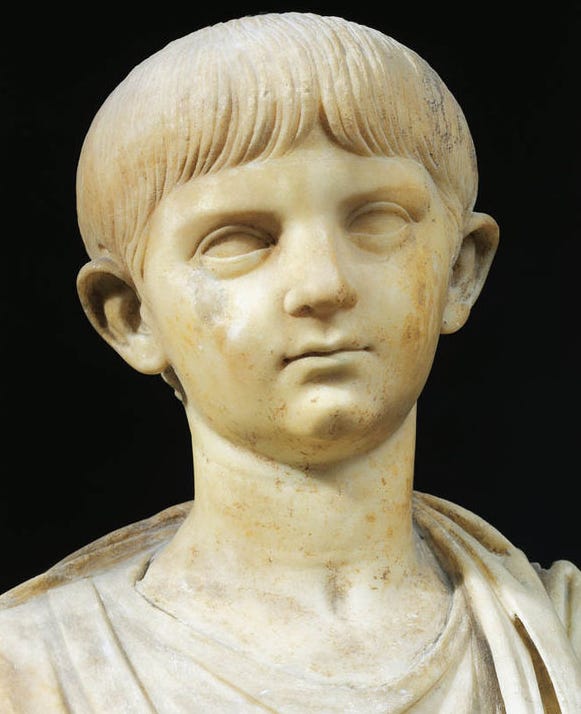
What Does ‘Mad’ Even Mean?
When we consider whether Nero was ‘mad’, the temptation is always just to say ‘yes’. The problem is that I’m not a doctor or a psychiatrist, and even if it were possible to remotely diagnose someone as ‘mad’, I wouldn’t know where to start. Neither, while we’re at it, do I have any real idea of what ‘mad’ actually means, at least in some sort of medical or psychological sense. ‘Mad’, therefore, just becomes a byword for strange behaviour, or, more specifically, behaviour that seems strange to us. What we must be careful to remember is that we tend to look back at the past and imagine what we would feel or do if we were a Roman. In doing so, we tend to forget sometimes that they saw their world differently than we might, and so ‘mad’ is a subjective term that might have had a different meaning to them than it does to us.
If we take Vespasian, for example, the man who ultimately ends up replacing Nero in the long run, we see him as something of a curmudgeonly, gruff, but overtly sensible and rational leader. But if he were a ruler in the 21st Century, he would go down as a bloodthirsty maniac who gloried in the death and destruction that seemed ingrained in the Roman psyche. He was the man who started the construction of that great temple to gore, the Colosseum, after all. Today, he would be considered ‘mad’, but compared to Nero, he is seen as a relief from all the unrestricted mayhem that went before.
Who Claimed He Was Mad?
The reason men like Nero are depicted so badly by the writers who survive them is both obvious and subtle. There is a practical side to it, of course, where the old administration, the one that has just collapsed, has its legitimacy questioned, the decisions made questioned, and the rulers slurred. Incoming rulers are, correspondingly, lauded to the rafters as people try to reposition themselves in the changing political landscape. It’s a simple piece of fawning - the old guy was awful, and I always hated him, but you guys are the best!
But there’s also another subtext in which a lot of these writers, men like Tacitus, for example, were a part of the system they are now going out of their way to slate. There’s a bit of self-soothing to their attacks on the previous administration, where they are trying, to some extent, to absolve themselves of their own responsibility for what happened. It wouldn’t be right to simply throw up one’s hands and admit that one was a helpless pawn in someone else’s game, because firstly, it makes one seem weak, and secondly, it makes one seem inconsequential. Inconsequential means disposable, and nobody wants to appear weak and disposable as a new sheriff rides into town. Instead, one can pretend that one was always trying to do something about the ‘mad’ bloke who went before, or was always against him in principle, and then one can portray said emperor as completely stark-raving bonkers, which excuses the fact that one could do nothing to stop him. One ramps his actions and insanity up to 11, so to speak, which shifts any blame for what happened conveniently away from oneself.
So those emperors who are portrayed as being mad might, in the grand scheme of things, have been no madder than any other emperor. Likewise, those who are portrayed as ‘evil’, who are, in reality, probably no more or less evil or mad than anyone else. Marcus Aurelius is seen as ‘good’, but in a Roman context. Again, make him the leader of a country in the 21st Century and, all the beard-stroking philosophical musing apart, he would be seen as a deranged tyrant.
One could make a case for all Roman emperors being ‘mad’.
